
Decision-making in achieving wellbeing outcomes for veterans
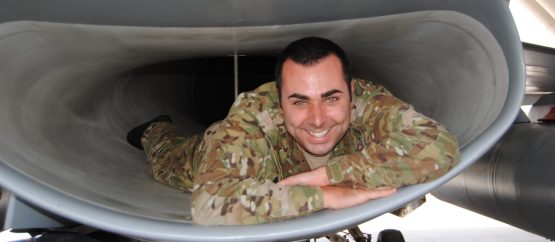
SQNLDR (Ret’d) Bernard Clarke
Manager of Quality, Compliance and Risk
Lived-Experience Peer Support Worker (Defence and Veterans)
On the 9th of February, the Hon Matt Keogh MP, Minister for Veterans’ Affairs and Minister for Defence Personnel announced that the Albanese Government is investing $739.2mil to improve the provision of the treatment and rehabilitation for veterans. This latest round of funding for veterans is intended to improve their daily functioning, prevent conditions from worsening, reduce long term impairment, support the mental health of veterans, and strengthen their long-term wellbeing and quality of life.
Although the finer details are being finalised, it got me thinking;
How will I decide what treatments or supports to pursue?
How is this different to the existing treatments and supports for which I am already eligible?
More simply, if this latest round of funding can be used towards rehabilitation and injury prevention,
do I go to pilates?
yoga?
Take up a gym membership?
If there is funding towards supporting my mental health, do I try something new like psilocybin or ketamine?
Should I give TMS a go? Or is it time to get a Service/Assistance dog?
With so many options at hand, how will I decide what is best for my own health and wellbeing?
Decision-making in the military
When I joined the RAAF in 2008, I made a conscious decision to pursue a life in the military. I signed on the dotted line, acknowledging that the Australian Government may send me to places that are not your typical holiday destinations. It was fraught with both excitement and uncertainty,
and I could only hope that wherever I ended up, the decision-makers had the right intel to ensure I was safe. There was a level of trust that I needed to have with the decision-maker and although I may not personally know the decision-maker, they were part of a broader hierarchy and system that I needed to have trust in.
As I racked up the years in the military, I became a decision-maker in the military hierarchy and system. This turned from deciding what to eat each day (shout-out to the Omelet Guy at Kandahar Airfield, 2014) to decisions that may have an impact on the health and welfare of the airmen & airwomen under my command.
I was part of the decision-making hierarchy and like my fellow decision-makers, would be developing a plan using the most reliable intel at hand. I needed to trust the process but more importantly, entrust the airmen & airwomen under my command and provide them a sense of reassurance that I got the right intel.
Decision-making and departing the military
In late 2017, I was diagnosed with PTSD, attributed to my military service. The psychiatrist advised that it would bring an end to my military career and that I should start planning for life after military service. I went through the Medical Employment Classification (MEC) review boards, entered an ADF Rehab Program and needed to do some upskilling in preparation for civilian life. The decision to leave the military was taken away from me and I was then asked, What would you like to do, post-military? I was lost! I was still getting my head around a life-changing medical condition that would have an impact on me and my young family. I still had a job in the military, people to supervise, annual leave to approve and a health centre to run. I was still supporting ADF members on how to navigate the ADF transition process while working it out myself. On top of that, I had to do extra work to meet my ADF rehab goals and was going all over the countryside to see the medical professionals as none of them were in the one location.
Although I had an extended ADF transition until early-2020, it went by in a flash, and I was a civilian once again. One of the easiest decisions to make during my ADF transition was where to live post-military life. For me, the Sunshine Coast was ideal in that I could be close to the beach and far away from an ADF base that would be a harsh reminder of my exit from service life.
It took me a few years to come out of my shell and feel comfortable talking about my military service or being surrounded by other veterans.
I am now fortunate that my line of work enables me to stay connected to the veteran community in a job that I enjoy and that also suits my family commitments. Each day I make decisions about my own health and wellbeing. I keep a close eye on the veteran health space as I am conscious that I am susceptible to ongoing health issues post-military life.
Just last week, the Australian Institute of Health and Welfare released the latest Health of Veterans Report, highlighting that Suicide is still a leading cause of death among veterans. Also concerning are the implications for chronic disease. The report highlighted that ex-serving members who separated involuntarily for medical reasons and those who were DVA clients had higher age-standardised prevalence of chronic conditions than those who separated voluntarily and non-DVA clients. It comes as no surprise then that in order to live a long and happy life with my family, I need to engage with clinical and community programs to minimise my risk of chronic health conditions. This isn’t just about my mental health, but my overall health and wellbeing.
Unpacking the latest funding to support veteran health
I am now at a point that I am no longer engaged with a rehab provider. I have made some good decisions to minimise my risk of chronic health conditions like going to the gym regularly, eating healthy and engaging with a Lifestyle Medicine physician.
I know that these decisions will support my long-term health outcomes so that I can lead a healthy happy life with my family. I know that not every veteran is in the same boat and when a funding announcement like the one last week is made, it can be exciting and overwhelming.
There is now going to be more to choose from, only for there to be sense that maybe I should try something else rather than another exercise program.
To put it in a military context, there is a scene towards the end of The Hurt Locker where SFC William James (Jeremy Renner) is looking for a box of cereal in the cereal aisle at a supermarket after he has returned home from a deployment to Iraq.
He stood there confused and overwhelmed with the number of choices available to him. For SFC James, the decision on which cereal box to choose was overwhelming.
Maybe he wanted to have someone make the decision for him. Maybe he wanted some advice on which cereal would be the best one for his own health. Maybe he wanted some insight into the pros and cons of selecting certain cereals over others.

This leads me to what we are working on at Thompson Brain and Mind Healthcare. What if there was a way that a rehab-focused package could be developed based on the latest research in Mental Health and Neuroscience?
I mean, what if someone could get an EEG (a bit like an ECG but of the brain), a blood test, mouth swab and a few questionnaires and determine which programs would be ideal for the individual?
To put it in military talk, what if the guessing work was taken out of rehab goals and someone gathered some intel on a veteran to determine which interventions, supports and rehab programs could be more successful in achieving their mission of living a healthy and happy life?
It may seem a bit science-fiction, but that is exactly what we are working towards as part of our Veterans Program. The idea is that we gain intel about the person and match it to the broader health/medical hierarchy to determine what treatments and supports would work best for that individual/veteran.
The treatment algorithm for each veteran will be based on research (intel) from the Mental Health and Neuroscience area that we have built trust in over many years of research and providing clinical care.
What is even more exciting is that as our team continues to grow, more services and programs are being provided in the one location so that the individual/veteran is not going all over the Sunshine Coast (or countryside) for their medical appointments. As we receive the finer details about the latest funding announcement, our program is also being finalised so that we can launch it imminently.
And you may ask What about Psychedelic Assisted Psychotherapy (PAP)? I hear that this latest funding announcement includes funding towards treatments using Psilocybin and MDMA, will you (Thompson Brain and Mind Healthcare) provide that? The answer is, Yes. As one of a few Clinical Trials sites in Australia for Psilocybin, we have a team of clinicians and researchers that are authorised to work in this space. Our treatment protocol is being reviewed by a Human Research and Ethics Committee so that we can meet the program guidelines set by the Department of Veteran Affairs. We are also engaging with government bodies and regulators so that our PAP Program is safe and meets the regulatory obligations. We do this so that we, as an organisation, can contribute to the knowledge base (intel) in PAP for veterans while building trust in the veteran health system. With our final preparations underway, we are aiming to start our Veteran PAP Program in mid-2026. If we get the green light beforehand, a SITREP (military talk for Situation Report) will be sent.