
Serotonin
Gene/Protein of the Month
Serotonin is a fundamental neurotransmitter that underpins the brain’s regulation of mood, cognition, and physiological stability.
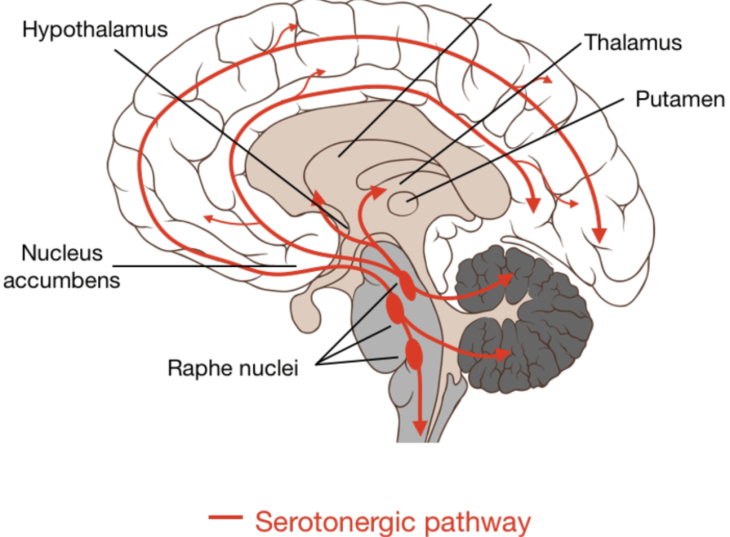
Derived from the essential amino acid tryptophan, serotonin is synthesised primarily in the raphe nuclei and exerts its effects by binding to a diverse family of receptors (5-HT1 to 5-HT7) distributed throughout the central and peripheral nervous systems. Once released into the synaptic cleft, serotonin shapes neuronal excitability, modulates synaptic strength, and influences downstream gene expression pathways that govern neural adaptability.
It plays a pivotal role in stabilising mood, supporting emotional processing, regulating appetite and sleep–wake cycles, and coordinating autonomic functions essential for homeostasis and wellbeing.
Serotonin is also central to the brain’s capacity to integrate internal and external signals to maintain behavioural and physiological equilibrium. It fine-tunes responses to stress, shapes cognitive flexibility, and contributes to learning processes by modulating neural circuits involved in reward, inhibition, and sensory processing.
Dysregulation of serotonergic pathways is implicated in major depressive disorder, anxiety disorders, obsessive–compulsive disorder, and migraine, while peripheral serotonin abnormalities affect gastrointestinal function and metabolic regulation. Its dual role as a neurotransmitter and neuromodulator, influencing both rapid synaptic communication and longer-term plasticity, underscores serotonin’s significance as one of the body’s most versatile and essential chemical messengers.
Written by Renee Curran
If you or someone you care about lives with ADHD, you’ve probably noticed how unpredictable things can feel, focus comes and goes, energy dips, moods swing. What’s often overlooked is how much nutrition can influence these patterns.
