PhD Candidate –DCS Augmented Neurofeedback in Adult ADHD
Thompson Brain & Mind Healthcare (TBMH), in collaboration with the Australian National University (ANU) is leading a randomised control trial investigating whether D-cycloserine (DCS), a partial NMDA receptor agonist, can augment learning-dependent neuroplasticity during 19-channel Z-score neurofeedback (NF) in adults with Attention-Deficit/Hyperactivity Disorder (ADHD).
The study uses a double-blind randomised controlled trial comparing Z-score NF combined with DCS versus NF with placebo, alongside an observational stimulant-medication comparison group. Outcomes include ADHD symptom severity, quantitative EEG biomarkers, neurofeedback learning curves, and neurocognitive performance.
The PhD candidate will work within a multidisciplinary clinical research team and will focus on the neurophysiological and cognitive mechanisms underpinning treatment response.
Research Aims of the PHD
The overarching aim of the PhD is to determine whether pharmacological facilitation of NMDA-dependent plasticity enhances neurofeedback learning and clinical outcomes in adult ADHD.
Key Responsibilities
Under supervision, the PhD candidate will:
- Contribute to the design, conduct, and integrity of a clinical RCT
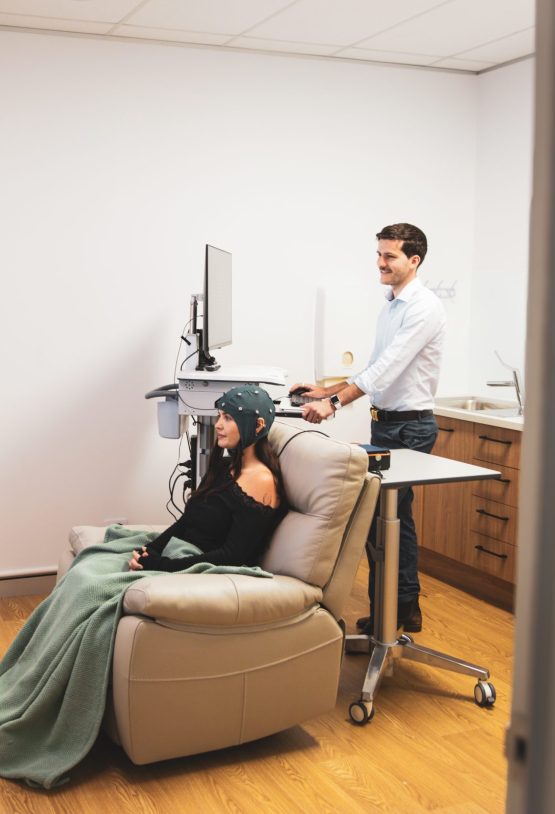
- Acquire high-quality resting state EEG recordings.
- Artifact and perform quality control on resting state EEG recordings.
- Conduct NF training sessions, document relevant training data and maintain accurate training records.
- Lead analysis of quantitative EEG data, including:
- Z-score metrics
- Theta/beta ratio
- Session-by-session learning curves
- Analyse neurocognitive and clinical outcome data
- Integrate electrophysiological, cognitive, and symptom measures using advanced statistical models
- Assist with trial documentation, reporting, and ethics compliance (training-appropriate)
- Prepare peer-reviewed publications, conference presentations, and a doctoral thesis
- Engage in interdisciplinary collaboration with clinicians, neurofeedback practitioners, and statisticians
Candidate Requirements
Essential:
- Honours or Master’s degree (or equivalent) in:
- Neuroscience
- Psychology
- Biomedical or Health Sciences
- Cognitive Science or related discipline
- Demonstrated research experience (thesis-based)
- Strong interest in neuroplasticity, ADHD, and translational neuroscience
- Capacity to work with complex datasets
Desirable
- Experience with EEG and neurophysiology
- Familiarity with clinical research or RCTs
- Statistical programming skills (R, Python, MATLAB)
- Interest in precision psychiatry or personalised interventions
Local And Enrolement
- Enrolment at the Australian National University (PhD, full-time)
- Primary research activities conducted within the Thompson Bran and Mind Healthcare site
- Some travel between sites may be required
Scholarship and Support
- Competitive, tax-free PhD stipend aligned with RTP or equivalent ANU scholarships
- Tuition fee offset (where applicable)
- Access to EEG laboratories, clinical datasets, and professional development opportunities
Application Process
Applicants should submit:
- CV
- Academic transcripts
- Brief statement of research interest
- Contact details for two academic referees
- Please send your submission to nwellington@tbmh.org.au
Not the right position for you? Feel free to share the link to someone you might know.
Thompson Brain & Mind Healthcare (TBMH), in collaboration with the ANU College of Science & Medicine, is pleased to announce a fully funded PhD scholarship opportunity in adolescent mental health.
Applicants should have a background in mental health, psychology, education/teaching, or medicine, and hold a Bachelors degree with First Class Honours (or equivalent).